The internet has transformed how businesses, organisations and individuals communicate, operate and reach their audiences. Today, almost every business needs a website to establish its online presence, showcase its products and services, attract customers and compete in the digital marketplace.
Behind these websites are skilled professionals who understand how to design, develop and maintain functional, attractive and user-friendly websites. These professionals are called web developers.
As businesses in Cameroon increasingly embrace digital technologies, web development is becoming an important skill for young people, students, entrepreneurs and anyone interested in building a career in the technology industry.
If you live in Buea or anywhere in Cameroon and are considering a career in web development, you may be wondering where to begin, what skills you need to acquire and where you can receive professional training.
This guide explores everything you need to know about web development training in Buea, including the technologies you should learn, career opportunities available to web developers and how you can begin your journey at Buea Institute of Technology (BIT).
Why Learn Web Development in 2026?
The digital economy is creating opportunities for people with practical technology skills. From small businesses and startups to large corporations, schools, NGOs and government institutions, organisations increasingly depend on websites and web-based applications to deliver their services.
Learning web development can open several opportunities.
1. Growing demand for websites and digital solutions
Businesses need websites to promote their products, communicate with customers, receive enquiries and sell products online.
This creates opportunities for skilled web developers who can design and build professional websites for different industries.
2. Opportunities for freelancing
Web development is one of the skills that allows you to work independently.
You can build websites for local businesses, international clients, entrepreneurs and organisations without necessarily working from a traditional office.
With a good portfolio and the ability to deliver quality work, you can explore freelance marketplaces such as Upwork and Fiverr or attract clients through your own professional network.
3. Opportunities for remote employment
Many technology companies and digital agencies work with distributed teams.
Developers with the right technical skills, communication abilities and professional experience can explore remote employment opportunities beyond their immediate geographical location.
4. Start your own web development business
You do not necessarily have to look for employment after acquiring web development skills.
You can establish a website design and development business, offer digital services to organisations or collaborate with graphic designers, digital marketers and other technology professionals.
5. Build your own digital products
Web development also gives you the technical foundation to turn your ideas into digital products.
You could develop an e-commerce platform, school management system, booking application, online directory, business management solution or other web-based application.
The possibilities are extensive, especially when you combine technical knowledge with creativity and entrepreneurial thinking.
What Is Web Development?
Web development refers to the process of creating, building and maintaining websites and web applications.
It involves using programming languages, frameworks, databases and other technologies to create websites that people can access through internet browsers such as Google Chrome, Mozilla Firefox and Microsoft Edge.
Web development goes beyond creating attractive web pages. It also involves ensuring that websites function properly, display correctly on different devices, load efficiently and provide users with a good experience.
There are three major areas of web development:
Front-End Web Development
Front-end development focuses on the parts of a website that visitors can see and interact with.
These include:
- Website layouts and page structures.
- Navigation menus and buttons.
- Images, colours and typography.
- Forms and interactive elements.
- Responsive layouts for mobile phones, tablets and computers.
Front-end developers primarily work with HTML, CSS and JavaScript.
Back-End Web Development
Back-end development deals with the server-side operations that make websites function.
For example, when you log into a website, submit an online application or make a purchase, back-end processes help handle the information involved.
Back-end development involves:
- Server-side programming.
- Database management.
- User registration and authentication.
- Processing information submitted by users.
- Managing website content and application data.
Technologies commonly used include PHP, Python, JavaScript (Node.js) and database management systems such as MySQL.
Full-Stack Web Development
Full-stack development combines front-end and back-end development.
A full-stack developer understands how to create the visible parts of a website as well as the server-side systems and databases that support its functionality.
For beginners, understanding these three areas provides a useful foundation for choosing a web development learning pathway.
What Do You Learn During Web Development Training?
Professional web development training should take you beyond theoretical explanations. You should learn how to use different technologies to create functional websites and web applications.
Here are some of the essential subjects you should expect to encounter during web development training.
1. HTML – Building the Structure of Websites
HTML (HyperText Markup Language) is the foundation of almost every website.
It provides the structure of web pages by defining elements such as headings, paragraphs, images, links, tables and forms.
During HTML training, you learn how to:
- Understand HTML elements and tags.
- Create headings and paragraphs.
- Insert images and hyperlinks.
- Create ordered and unordered lists.
- Build tables and forms.
- Structure web pages using semantic HTML.
HTML is usually the first technology beginners learn when entering web development.
2. CSS – Designing and Styling Websites
CSS (Cascading Style Sheets) is used to control the appearance and layout of websites.
While HTML provides the structure, CSS determines how the content looks.
You will learn how to:
- Apply colours, fonts and backgrounds.
- Control spacing, margins and padding.
- Create attractive website layouts.
- Use CSS Flexbox and Grid.
- Design responsive websites.
- Create animations and visual effects.
Responsive web design is particularly important because websites must work properly on smartphones, tablets and desktop computers.
3. JavaScript – Making Websites Interactive
JavaScript is a programming language that allows developers to introduce interactivity and dynamic functionality into websites.
Examples include interactive navigation menus, image sliders, calculators, form validation and dynamic content.
During JavaScript training, you should learn:
- Variables and data types.
- Operators and expressions.
- Conditional statements.
- Loops and functions.
- Arrays and objects.
- Events and event handling.
- Document Object Model (DOM) manipulation.
JavaScript is an essential skill for anyone interested in modern front-end development.
4. PHP – Developing Dynamic Websites
HTML and CSS can create attractive web pages, but many websites require additional functionality.
For example, an online shopping platform needs to manage products, customers, orders and payments. A school website may need to manage student records and online applications.
PHP is a server-side programming language commonly used to build dynamic websites and web applications.
During PHP training, you learn:
- PHP syntax and variables.
- Data types and operators.
- Conditional statements and loops.
- Functions and arrays.
- Processing user input.
- Working with sessions.
- Connecting PHP applications to databases.
PHP provides a practical introduction to server-side programming and dynamic web development.
5. Database Management and MySQL
Most dynamic websites need to store and retrieve information.
Databases make this possible.
For example, an e-commerce website needs to store information about products, customers, orders and transactions.
During database training, you should learn:
- Introduction to relational databases.
- Database design and modelling.
- Creating database tables.
- Understanding primary and foreign keys.
- Inserting, updating and retrieving information.
- Writing SQL queries.
- Connecting PHP applications to MySQL databases.
Understanding databases is particularly important if you intend to develop sophisticated web applications.
6. WordPress and Content Management Systems
Not every website needs to be developed entirely from scratch.
Content Management Systems (CMS) such as WordPress allow developers to create and manage websites using ready-made themes, plugins and other tools.
WordPress is widely used for business websites, blogs, institutional websites and e-commerce platforms.
During WordPress training, you can learn how to:
- Install and configure WordPress.
- Select and customise themes.
- Install and configure plugins.
- Create pages and blog posts.
- Manage website menus and navigation.
- Build business websites.
- Create and manage e-commerce websites.
WordPress is particularly useful for people interested in website design, freelancing and providing digital services to businesses.
7. Website Deployment, Hosting and Maintenance
Developing a website on your computer is only part of the process. You also need to understand how to make it accessible to people online.
This involves learning about:
- Domain names and web hosting.
- Web servers and hosting environments.
- Uploading websites to hosting servers.
- Configuring databases on hosting platforms.
- Installing SSL certificates.
- Website backups and security.
- Troubleshooting and website maintenance.
These skills help you move from building websites locally to delivering working websites for real clients.
What Can You Build After Web Development Training?
One of the most exciting aspects of learning web development is the opportunity to transform ideas into functional digital solutions.
With the right training and sufficient practice, you can develop different types of websites and web applications.
Examples include:
Personal portfolio websites: Websites that showcase your skills, experience and projects to potential employers and clients.
Business websites: Professional websites that help companies present their services, communicate with customers and generate enquiries.
E-commerce websites: Online shopping platforms where businesses can display products, manage orders and sell to customers.
School and institutional websites: Websites that provide information about programmes, admissions, events and institutional activities.
Blogs and online magazines: Platforms for publishing articles, news, educational content and other information.
Booking and reservation systems: Web applications that allow customers to book appointments, reserve services or make enquiries.
Business management applications: Systems for managing customers, employees, inventory, sales and other business operations.
A good web development training programme should give you opportunities to work on practical projects so that you can apply what you learn.
How Long Does It Take to Learn Web Development?
The time required to learn web development depends on the type of training you undertake, your previous experience, the time you dedicate to practice and the level of competence you want to achieve.
You can learn the fundamentals of HTML and CSS within a relatively short period, but becoming confident in JavaScript, PHP, databases and complete web application development requires more time and consistent practice.
Your learning journey may involve the following stages:
- Beginner level: Understanding HTML, CSS and the basic structure of websites.
- Intermediate level: Learning JavaScript, responsive design and dynamic website development.
- Advanced level: Working with PHP, databases, authentication and more complex web applications.
- Professional development: Building a portfolio, completing practical projects and gaining experience working on real client requirements.
Remember that web development is a continuous learning process. Technologies evolve, and professional developers must keep improving their skills.
Career Opportunities After Web Development Training
Web development can prepare you for different career paths within the technology and digital services industries.
Some opportunities include:
Web Developer
Designs, develops and maintains websites and web applications.
Front-End Developer
Specialises in developing the visual and interactive components of websites.
Back-End Developer
Develops server-side systems, databases and application functionality.
WordPress Developer
Creates, customises and maintains websites using WordPress.
Freelance Web Designer
Works independently to create websites for individuals, businesses and organisations.
E-commerce Developer
Develops and maintains online shopping platforms and related digital systems.
Web Administrator
Manages website content, updates, security and general maintenance.
UI/UX Designer
Designs user interfaces and improves the experience people have when interacting with websites and digital applications.
Beyond employment, you can also establish your own website development business and provide services to clients in Cameroon and internationally.
Where Can You Get Web Development Training in Buea?
If you are looking for web development training in Buea, choosing the right institution is an important decision.
You need a training centre that provides more than theoretical knowledge. Look for an institution that combines structured learning, practical exercises, qualified instruction and opportunities to develop real-world projects.
One institution offering structured ICT and digital skills training in Buea is Buea Institute of Technology (BIT).
Located in Molyko, Buea, BIT is a vocational training institution specialising in Information and Communication Technologies (ICTs) and Media Studies.
The institution provides practical, industry-oriented training designed to equip students with skills relevant to today’s digital economy.
For students interested in website development and digital design, BIT offers two relevant programmes: the National Diploma (ND) in Webmaster and the Higher National Diploma (HND) in Computer Graphic and Web Design.
Let’s look at these programmes.
Study Web Development at Buea Institute of Technology
1. National Diploma (ND) in Webmaster
The National Diploma in Webmaster is a programme for individuals interested in developing the technical skills required to create, manage and maintain websites.
The programme provides a foundation in web technologies and related ICT subjects, helping students understand how websites are designed, developed and managed.
Areas of study include:
- HTML and CSS.
- JavaScript programming.
- PHP programming.
- Database Management Systems.
- WordPress and Content Management Systems.
- Website design and development.
- Graphic and multimedia fundamentals.
- Website administration and maintenance.
Through structured learning and practical exercises, students develop an understanding of the technologies used to build and manage websites.
Who should consider the ND Webmaster programme?
This programme is suitable for:
- GCE Advanced Level graduates interested in technology.
- School leavers looking for professional ICT training.
- Beginners who want to develop website development skills.
- Individuals interested in website design and administration.
- Young people considering careers in the digital economy.
Why study ND Webmaster at BIT?
The programme provides a structured pathway for students who want to develop practical website development and administration skills.
Rather than approaching web development as an isolated skill, students are introduced to the different technologies and concepts involved in creating and managing websites.
Interested in pursuing a career in website development?
Explore the programme here:
National Diploma (ND) in Webmaster – Buea Institute of Technology
2. Higher National Diploma (HND) in Computer Graphic and Web Design
Are you interested in combining technology, creativity and digital communication?
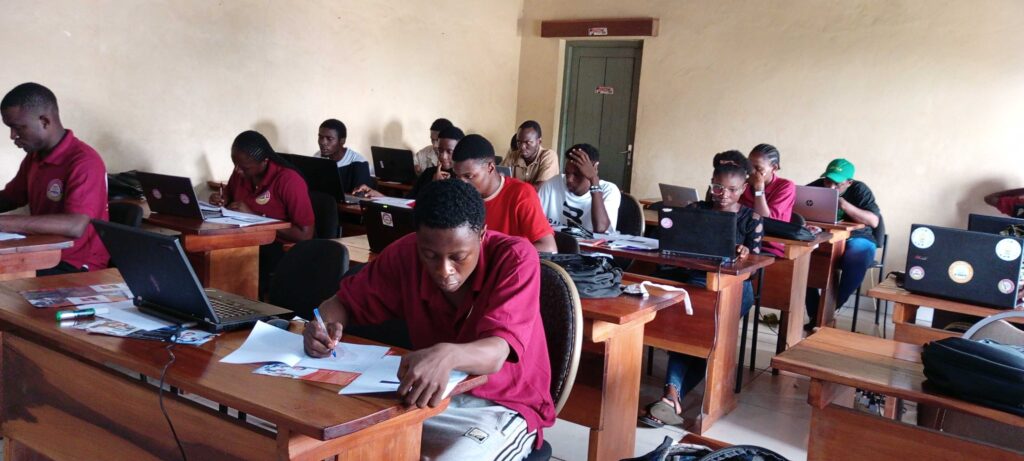
The Higher National Diploma in Computer Graphic and Web Design at Buea Institute of Technology offers a broader learning pathway that combines graphic design, multimedia production and web development.
Unlike programmes focused exclusively on website development, this programme brings together the technical and creative skills required to produce digital content and interactive web experiences.
Areas of study include:
Web Development
- HTML and CSS.
- JavaScript programming.
- PHP programming.
- Database Management Systems.
- WordPress and website management.
Computer Graphic Design
- Principles of graphic design.
- Digital illustration.
- Adobe Illustrator.
- Drawing and visual communication.
- Image editing and manipulation.
Multimedia and Animation
- Digital animation.
- Adobe Animate.
- Video editing.
- Motion graphics and visual effects.
- Multimedia production.
This combination allows students to explore both the technical and creative aspects of digital production.
Who should consider the HND Computer Graphic and Web Design programme?
The programme is suitable for:
- GCE Advanced Level and Baccalaureate graduates.
- Individuals interested in graphic and web design.
- Aspiring web developers who also enjoy creative work.
- Students interested in multimedia and digital content production.
- Individuals seeking careers in the creative and technology industries.
Career opportunities after graduation
Depending on their interests and professional development, graduates can explore opportunities as:
- Web Developers.
- Graphic Designers.
- Web Designers.
- Multimedia Artists.
- Digital Designers.
- UI/UX Designers.
- Digital Content Creators.
The combination of design and technical skills can also be valuable for individuals interested in establishing creative studios or digital service businesses.
If you want to combine creativity and technology, discover the HND Computer Graphic and Web Design programme at BIT.
Explore HND Computer Graphic and Web Design
ND Webmaster vs HND Computer Graphic and Web Design: Which Should You Choose?
Both programmes offer pathways into the digital technology industry, but they have different areas of emphasis.
The ND Webmaster programme is more directly focused on website development, website management and the technologies used to create functional websites.
The HND Computer Graphic and Web Design programme combines web development with extensive training in graphic design, illustration, animation and multimedia production.
Here is a simple comparison:
| Feature | ND Webmaster | HND Computer Graphic and Web Design |
|---|---|---|
| Main focus | Website development and management | Graphic design, multimedia and web development |
| HTML and CSS | Included | Included |
| JavaScript | Included | Included |
| PHP | Included | Included |
| Database management | Included | Included |
| WordPress | Included | Included |
| Graphic design | Supporting skills | Major area of study |
| Digital illustration | Not the main focus | Included |
| Multimedia production | Not the main focus | Included |
| Animation | Not the main focus | Included |
Which programme is right for you?
Choose ND Webmaster if your main interest is building websites, learning programming and managing web-based platforms.
Choose HND Computer Graphic and Web Design if you want to combine website development with professional graphic design, digital illustration, animation and multimedia production.
Both pathways can provide valuable foundations for a career in the digital economy.
For specific admission requirements, programme duration and current fees, consult the respective programme pages or contact BIT.
Why Choose Buea Institute of Technology for Web Development Training in Buea?
Choosing where to study is just as important as choosing what to study.
At Buea Institute of Technology, students have the opportunity to develop practical ICT and media skills through structured vocational and professional training.
Here are some reasons to consider BIT:
1. Practical, industry-oriented training
BIT emphasises practical skills that students can apply in professional environments and real-world projects.
2. Relevant technology skills
Students are introduced to technologies and tools used in website development, digital design and multimedia production.
3. Different learning pathways
With the ND Webmaster and HND Computer Graphic and Web Design programmes, prospective students can choose a pathway that aligns with their interests and career ambitions.
4. A focus on employability and entrepreneurship
The skills acquired can support different career pathways, including employment, freelancing and starting a digital services business.
5. Training in ICT and Media Studies
BIT’s specialisation in ICT and Media Studies provides an environment where students can explore both technical and creative digital disciplines.
Frequently Asked Questions About Web Development Training in Buea
1. Where can I get web development training in Buea?
Buea Institute of Technology (BIT), located in Molyko, Buea, offers web development-related training through its National Diploma in Webmaster and Higher National Diploma in Computer Graphic and Web Design programmes.
Visit www.bit.edu.cm to explore the available programmes.
2. Can I learn web development without prior programming experience?
Yes. You do not need to be an experienced programmer to begin learning web development.
Most beginners start with HTML and CSS before progressing to JavaScript, PHP and database management.
A structured training programme can help you learn these technologies progressively.
3. What qualifications do I need to study web development in Cameroon?
Entry requirements depend on the programme and qualification you intend to pursue.
At BIT, the ND Webmaster and HND Computer Graphic and Web Design programmes have their respective admission requirements. Consult the official programme pages for the latest details.
4. How long does web development training take?
The duration depends on the level and type of programme.
Learning basic website development may take a few months, while more comprehensive programmes covering programming, databases and professional project development require longer periods of structured training.
5. What programming languages should a beginner learn?
HTML, CSS and JavaScript are excellent starting points.
You can then progress to PHP and database technologies such as MySQL to learn how to build dynamic websites and web applications.
6. Is web development a good career in Cameroon?
Web development offers opportunities in website design, software development, digital agencies, e-commerce and entrepreneurship.
As organisations continue adopting digital technologies, people with relevant web development skills can explore opportunities in different sectors.
7. Can I become a freelance web developer after training?
Yes. With the right technical skills, practical experience and a good portfolio, you can offer website development services to individuals, businesses and organisations.
However, freelancing also requires communication, project management, problem-solving and client relationship skills.
8. What is the difference between ND Webmaster and HND Computer Graphic and Web Design?
The ND Webmaster programme focuses primarily on website development and administration.
The HND Computer Graphic and Web Design programme combines web development with graphic design, digital illustration, animation and multimedia production.
Your choice should depend on the skills and career pathway you want to pursue.
9. Does web development training include practical projects?
Practical projects are an important part of effective web development training. They help students apply programming concepts, solve problems and develop a portfolio of completed work.
Prospective students should look for programmes that combine classroom instruction with practical exercises and project work.
10. What career opportunities are available after studying web development?
Possible career pathways include web developer, front-end developer, back-end developer, WordPress developer, freelance web designer and web administrator.
You can also use your skills to start a website development business or develop your own digital products.
Start Your Web Development Journey in Buea Today!
The digital economy is creating opportunities for people who have the ability to design, develop and manage digital solutions.
Web development is more than learning how to write computer code. It is about acquiring the ability to solve problems, create useful digital products and transform ideas into functional websites and applications.
Whether you want to become a professional web developer, work as a freelancer, establish a digital services business or develop websites for your own organisation, acquiring the right skills is an important first step.
At Buea Institute of Technology (BIT), you can explore structured training opportunities through the National Diploma in Webmaster and the Higher National Diploma in Computer Graphic and Web Design programmes.
You do not have to wait until you become an expert to begin. Start learning, practise consistently and build the skills that can help you participate in the digital economy.
Your journey into web development can start at BIT!
Explore our programmes:
Buea Institute of Technology (BIT)
Molyko, Buea, Cameroon.
Website: www.bit.edu.cm