A software engineering internship gives students the opportunity to work with professional developers, contribute to real projects, understand how software teams operate, and build the practical experience employers look for. For many aspiring software engineers, learning to code is only the beginning. The real transformation happens when you take those skills beyond the classroom and apply them to real-world problems.
For students in Cameroon, particularly those studying in technology hubs such as Buea, Douala and Yaoundé, there are growing opportunities to gain this experience through software companies, technology startups, digital agencies and innovation organisations.
But how do you actually find an internship? What skills should you have before applying? Where should you look? And how can you make your application stand out?
This guide answers these questions and provides a practical roadmap for students looking for a software engineering internship in Cameroon.
Why a Software Engineering Internship Matters
You can learn programming from a classroom, online course or YouTube tutorial. However, professional software development involves much more than writing code.
During an internship, you may learn how to:
- Work as part of a software development team
- Understand and implement project requirements
- Use Git and GitHub for version control
- Design and work with databases
- Build and test web or mobile applications
- Debug and maintain existing software
- Participate in code reviews
- Communicate with clients and team members
- Use project management and collaboration tools
- Follow professional software development workflows
- Deploy applications and troubleshoot problems
Internships can therefore help bridge the gap between academic knowledge and workplace skills.
For example, a student who has learned PHP, JavaScript and database development in class may understand the technical concepts. An internship can expose that student to the additional realities of developing a complete application for an actual client—from gathering requirements and designing the system to testing, deployment and maintenance.
When Should You Start Looking for an Internship?
One common mistake students make is waiting until the last minute.
If your school requires an industrial attachment, begin searching several weeks or even months before your expected internship period.
Do not wait until you receive your internship letter before starting your search.
A good strategy is to maintain a list of potential companies throughout the academic year. Follow their websites and social media pages, attend technology events, connect with developers on LinkedIn and ask lecturers or other professionals about available opportunities.
In Buea, students have access to a particularly active technology ecosystem. The city is home to software companies, startups, digital businesses and technology training organisations.
For example, Zinger Systems is based in Great Soppo, Buea and works across software development, DevOps and software testing. Its website describes work involving technologies including PHP, Python, JavaScript, Dart, Flutter and .NET.
Zepstra, based in Molyko, Buea, also operates an internship programme for students from different academic backgrounds. Its internship information indicates that students can apply throughout the year, with many placements lasting 12–16 weeks.
Another local option is Dynamic Tech, which explicitly invites students and recent graduates to apply for practical internships covering software, networks, hardware and IT support, including academic industrial attachments.
1. Build the Right Technical Skills
Before applying for a software engineering internship, make sure you have a foundation in programming and software development.
You don’t need to know every programming language. Instead, develop strong fundamentals in one or two areas.
Depending on your career interests, useful skills include:
Programming
Consider learning at least one programming language well:
- JavaScript
- Python
- PHP
- Java
- C#
- C/C++
- Dart
The goal should not simply be to memorise syntax. You should be able to use programming concepts to solve problems.
Web Development
For students interested in web development, learn:
- HTML
- CSS
- JavaScript
- PHP or another backend language
- SQL
- REST APIs
- Responsive web design
Databases
Learn the fundamentals of:
- Database design
- SQL
- Tables and relationships
- CRUD operations
- Primary and foreign keys
- Database security
- MySQL or another relational database system
Version Control
Git and GitHub are particularly important.
You should understand how to:
- Create repositories
- Commit changes
- Create branches
- Merge changes
- Push and pull code
- Work with remote repositories
- Write useful commit messages
These skills demonstrate that you understand how modern development teams collaborate.
2. Build Projects Before Applying
One of the best ways to make your internship application stronger is to have something you can show.
Don’t simply write:
“I know PHP and JavaScript.”
Build something with them.
For example, you could develop:
- A student management system
- An online examination platform
- A school attendance system
- An e-commerce website
- A hospital appointment system
- A library management system
- A church management application
- A business inventory system
- A mobile application
- A school fee management system
- A REST API
- A personal portfolio website
Put your projects on GitHub and, where possible, deploy them online.
When an employer can see what you have actually built, your application becomes much more meaningful.
3. Create a Professional GitHub Profile
Your GitHub profile can function as a public portfolio of your development work.
Before applying for internships, make sure it contains:
- Your best projects
- Clear project descriptions
- Installation instructions
- Screenshots where appropriate
- Technologies used
- Well-organised source code
- Meaningful commit messages
- A professional profile README
You don’t need dozens of repositories.
Three good projects are better than twenty unfinished ones.
4. Prepare a Good Software Engineering Internship CV
Your CV should make it easy for an organisation to understand what you can do.
Include:
Personal information
- Full name
- Phone number
- Professional email address
- LinkedIn profile
- GitHub profile
- Portfolio website, if available
Education
Mention your programme, institution and expected graduation date.
Technical skills
Group your skills into categories such as:
Programming: PHP, JavaScript, Python
Web: HTML, CSS, WordPress
Database: MySQL
Tools: Git, GitHub, VS Code
Frameworks: Laravel, React, Flutter, etc.
Only include technologies you can actually use.
Projects
Give brief descriptions of relevant projects you have completed.
For example:
Student Management System
Developed a web-based application for managing student records, courses, payments and academic information using PHP, MySQL, HTML, CSS and JavaScript.
Experience
If you have freelance, volunteer, school or personal development experience, include it.
Remember: experience doesn’t always mean previous employment.
A student who has built websites for small businesses, contributed to an open-source project or developed applications for a school project already has practical experience worth presenting.
5. Write a Good Internship Application Letter
Avoid sending the same generic application to every company.
Research the organisation first.
Explain:
- Who you are
- What you are studying
- Why you are interested in the company
- What skills you have
- What you hope to learn
- When you are available
- How you can contribute
Keep your letter professional and concise.
If the organisation has a formal internship application process, follow it carefully.
6. Search for Internship Opportunities Online
Don’t depend on one source.
Search through:
- Company websites
- Job boards
- University and training institution networks
- Technology communities
- Startup communities
- Professional associations
- Facebook and WhatsApp technology communities
- Personal contacts
Some companies advertise internships publicly, while others accept applications directly.
For example, Zepstra publishes internship information and provides an application email for students.
Similarly, Dynamic Tech currently presents an explicit internship route for students and recent graduates on its website.
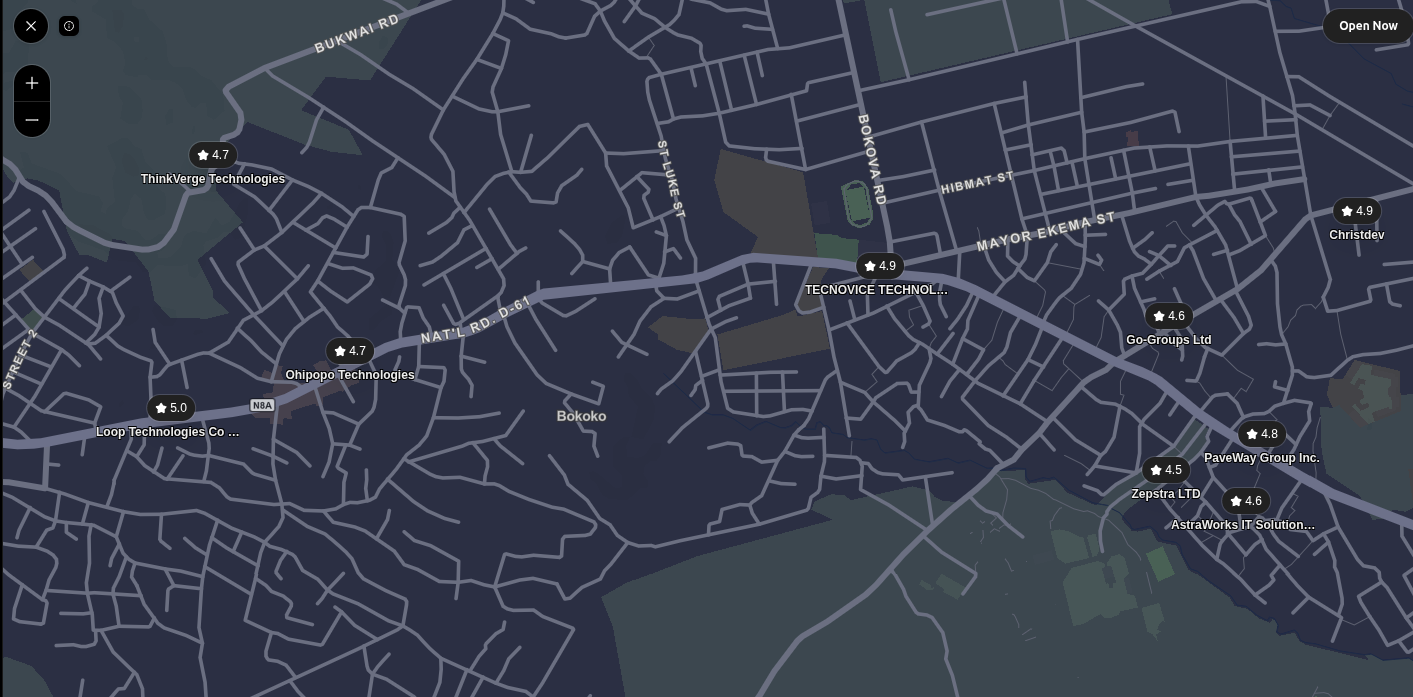
7. Consider Software Companies in Buea
Students studying in Buea have an advantage: they don’t necessarily have to travel to Douala or Yaoundé to find technology companies.
Buea has a significant concentration of software and technology businesses.
Students can research organisations such as:
- Zepstra LTD
- Go-Groups Ltd
- Loop Technologies Co LTD
- Nexora Empire
- Ohipopo Technologies
- PaveWay Group Inc.
- TECNOVICE TECHNOLOGIES LTD
- ThinkVerge Technologies
- AstraWorks IT Solutions Inc.
- Christdev
These businesses appear in current local business listings as software or technology companies in Buea. Students should contact each organisation directly to confirm whether it currently accepts interns and what its application requirements are.
Companies with published internship information
A few organisations provide particularly useful starting points because internship information is publicly available:
Zepstra Ltd — Buea
Zepstra states that it offers internships to students from different academic backgrounds and accepts internship applications throughout the year. Its published internship information includes an application email and office contact details.
Visit Zepstra’s internship page
Dynamic Tech — Buea
Dynamic Tech states that students and recent graduates can apply for practical internships in software, networks, hardware and IT support, including school-required industrial attachments.
Zinger Systems — Buea
Zinger Systems is a software development company based in Great Soppo, Buea. Its published information describes software development, DevOps and software testing services, as well as experience with a broad range of programming and development technologies.
Iknite Space — Buea
Iknite Space operates a technology talent accelerator in Buea. Its current programme information describes a six-month programme followed by a six-month internship, providing another pathway for aspiring engineers to gain practical experience.
PlastiBytes — Buea
PlastiBytes has advertised software developer internship opportunities in Buea involving web applications, internal tools, automation, coding, testing and debugging. The published opportunity sought familiarity with programming, Git and web technologies. Students should verify whether a new intake is currently open before applying.
8. Don’t Ignore Startups and Small Technology Companies
Many students only think about large companies when searching for internships.
That can be a mistake.
A smaller software company may provide opportunities to participate in several stages of a project because development teams are often smaller.
You might have the opportunity to:
- Talk directly with developers
- Attend project meetings
- Work on actual features
- Fix bugs
- Design database structures
- Test applications
- Deploy software
- Interact with clients
The objective of an internship should not simply be to obtain a certificate.
The goal is to become more capable.
9. Network With Software Developers
Sometimes the best internship opportunity isn’t advertised publicly.
Build relationships with people in the technology industry.
Attend:
- Tech meetups
- Hackathons
- Developer conferences
- Startup events
- Coding workshops
- Technology seminars
- University technology events
Connect with developers and technology companies on LinkedIn.
When contacting someone, don’t simply write:
“Sir, please give me an internship.”
Instead, introduce yourself professionally, explain what you are studying, mention your technical interests and ask whether the organisation accepts interns.
10. Apply Even When There Is No Internship Advertisement
You don’t always have to wait for a company to announce an internship.
If you identify a software company where you would like to learn, research the company and send a professional speculative application.
Explain:
“I am a student studying software engineering and I am seeking an industrial attachment from [date] to [date]. I would be interested in contributing to your software development team while gaining practical experience.”
Attach your:
- CV
- Internship request letter
- School recommendation letter, if required
- Portfolio/GitHub link
This approach can open opportunities that aren’t publicly advertised.
11. Prepare for the Technical Interview
Some organisations may ask you technical questions before accepting you.
Revise your fundamentals.
You may be asked about:
- Variables
- Functions
- Arrays
- Loops
- Object-oriented programming
- Databases
- SQL
- HTML/CSS
- JavaScript
- APIs
- Git
- Algorithms
- Data structures
- Debugging
You may also be asked to solve a small programming problem.
Don’t panic if you don’t know everything.
An internship is designed for learning. What matters is demonstrating that you understand the fundamentals, can solve problems and are willing to learn.
12. Make Your Internship About Learning—Not Just Certification
At the end of your internship, don’t measure your success only by whether you received an internship certificate.
Ask yourself:
- What applications did I build?
- What programming languages did I use?
- What development tools did I learn?
- Did I use Git?
- Did I work with a team?
- Did I contribute to production software?
- Did I learn how to debug?
- Did I understand the software development lifecycle?
- Can I now build something I couldn’t build before?
These questions will help you get much more value from the experience.
Start Building Your Software Engineering Career at Buea Institute of Technology
For students who want to pursue a career in software development, the right internship starts with the right foundation.
At Buea Institute of Technology (BIT), the Department of Web and Software Development focuses on helping students develop practical skills for careers in web and software development, including front-end development, back-end development, mobile application development and software engineering.
BIT offers programmes designed for students at different stages of their development journey.
HND Software Engineering
The HND Software Engineering programme is designed for students who want to develop deeper technical expertise and prepare for professional careers in software development.
Students can build knowledge in areas such as:
- Software engineering
- Programming
- Web application development
- Mobile application development
- Database development
- Systems analysis and design
- Software testing
- Application development
- Project development
- Modern software development tools
The objective is to move beyond simply learning how to code and develop the ability to analyse problems, design solutions, build applications and work on real-world software projects.
ND Applications Development
For students looking for a practical pathway into application development, BIT’s National Diploma in Applications Development provides a foundation for developing software applications and building the technical skills needed for the technology industry.
The programme can provide students with a foundation in programming, databases, application development and software project work—skills that can later be strengthened through further study and industry experience.
Why Choose a Programme With Internship in Mind?
Your education and internship should complement each other.
A strong approach is:
Learn → Practise → Build → Intern → Improve → Build a Portfolio → Start Your Career
Don’t wait until graduation to begin developing professional experience.
Start building projects while you’re still a student. Start networking before your internship period. Start researching companies early. And when you finally secure an internship, arrive prepared to learn and contribute.
Your Software Engineering Career Can Start With One Application
Finding a software engineering internship in Cameroon may require persistence.
You may send several applications before receiving an opportunity. You may not get your first-choice company. You may discover that you need to improve your programming skills before applying again.
Don’t be discouraged.
Every project you build, every programming problem you solve, every GitHub repository you create and every professional connection you make brings you closer to becoming an industry-ready developer.
If you’re serious about building a career in software engineering, start preparing now.
Learn the fundamentals. Build real projects. Create your portfolio. Apply widely. Network with professionals. And use your internship as a bridge between the classroom and the technology industry.
And if you are looking for a practical technology education in Cameroon, explore the HND Software Engineering and ND Applications Development programmes at Buea Institute of Technology and take your first step towards a career in software development.
Your journey from student to software engineer can start today.